Showing posts with label History. Show all posts

Wednesday, May 1, 2013

Old Trains are the Best Way to Enjoy Scenery - Even in Waterloo

I love travelling by train.  Modern trains are practical and relaxing.  Old trains are quaint and perhaps even "magical."

This last weekend, I drove my family (minus the baby twins) to St. Jacob's (about 15 minutes away from home,) and enjoyed a wonderful ride on the Waterloo Central Railway.  It is operated by the Southern Ontario Locomotive Restoration Society; it is meant to be nostalgic, scenic and relaxing - and it certainly is all three.

The kids were absolutely delighted!

First, some pictures of the ride into Waterloo:


Arriving at the Waterloo station (on Erb, just west of King St.):


The station is directly next to Waterloo Park (the Eby Farm Lot), so we had a picnic and went to see the animals at the park's little zoo:


And the ride back to St. Jacob's:


The Conestoga River:


As you can see in the pictures above, the train we rode on was an old diesel.  The train service also owns an old steam locomotive, which they've fully restored and works 100% - I believe it's from the 1920's!  They only get this one out for special holidays.  I believe it will be running for the Victoria Day weekend, in which case, they run all the way to Elmira - about double the distance:


The workers pointed out that even if we didn't want to buy tickets again so soon (which cost more when they use the old steam engine), you can just show up to see and hear it in action! I think we'll take that option.  They are also in the process of restoring another steam engine:


The caboose one the train we were riding was also relatively modern.  The days they run the steam engine, they bring out a caboose to match:


The day was entirely worth it.  It really can be enjoyable to take an hour for a trip that would otherwise take 10 minutes!  The views of the countryside, the river, the market and Waterloo Park were all wonderful.  The only complaint from the photographer (my wife) was that the entire north end of Waterloo (about 10 minutes of the trip) was a long stretch of rectangular, white character-less buildings owned by Blackberry, with a bit of older industry thrown in.  But even for those parts, the kids were fascinated.

I have to say, I've found that trains are always the best way to enjoy scenery.  Something about them makes it easier.  Is it the larger windows?  The spaciousness inside?  The fact that they're on tracks (as opposed to the road) and not surrounded by traffic?  And - regardless of whether they're on the tracks because of nostalgia or economic factors that have prevented upgrade - old trains go slow and make this even better.

It was also nice because it's close to home, and - taking our time and relaxing - the entire outing was just 4 or 5 hours.  We weren't exhausted from driving in traffic to get somewhere, or rushing, or getting home late, etc.  It was ideal for the kids, and we just felt good.

The world - even when it's the world you grew up in and spent more than half your life in - looks different when seen from an old train.

Thursday, June 28, 2012

Mexico's Elections 2012 - Why I'm NOT Voting, and a Note about the PRI

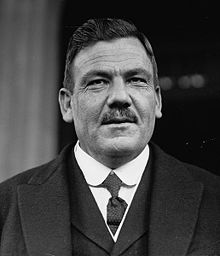
Founder of PRI, responsible for the death of 90,000 Mexicans
Mexico's presidential elections are coming up this Sunday, the same day as Canada Day.  I'm a Mexican citizen, and have the right to vote in these elections.  Unfortunately, I won't be voting.  Here's why:

I left Mexico for Canada in April of this year.  Some time after arrival, my wife investigated how to register to vote from abroad.  As it turned out, we had to apply at Mexico's embassy in Toronto in January 2012 at the latest.  At the time she found the info, the applications which were received were being evaluated for possible approval.  Essentially, unless we had made a special trip to Toronto in January just to register, it would've been impossible.  Alternatively, we could make a special trip to Mexico on July 1st just to vote.  Since my wife is pregnant with twins (and getting really close to delivery) and Mexico can be little unruly at election time, we had to rule this possibility out.  (The budget was also a factor.)

This was a great disappointment.  We had been talking about the candidates and trying to choose the best one to vote for.  A friend of mine made a comment something like this on Facebook: "Not voting is one of the most cowardly actions to take at election time."  I agree. And I'm sad that I can't vote.  I believe it's not only our right to vote when we can, but our obligation.

Now, a note about the candidates.  While I'll refrain from saying which candidate I would have voted, I will say who I definitely wouldn't have voted for.  Although Enrique Pena Nieto is young and hansom, and claims to have distanced himself from his party's past, I still don't think a president from his party would be a good idea; his party is the PRI - the Institutional Revolution Party, which I wrote about before (The Institutionalized Revolution & Mexican Bureaucracy.)  Besides being the engineers of the bureaucratic mess that defines most of Mexico's government organizations, they also have a track record of hanging on to power and the presidency in an oligarchy style, and of violent repression of opposition.

Many people like to talk about the 1968 Tlatelolco massacre in which somewhere between 30 and 300 civilians (mostly student protesters) where shot.  I agree that this event was horrible. However, it seems that little is being said about the very origins of the PRI;  the party was created by president Plutarco Elías Calles, who was also the instigator of the Cristero War, in which over 90,000 people were killed in less than 3 years. (That's double of even the biggest estimates of President Calderon's 6 year war on drugs - this is also a problem, but at the very least, this is an war against illegal - and often inhuman - activity, while the Cristeros War, which killed twice as many people in half the time, was a war against people's religious freedom.)  So, about 1968, what could you expect from a party which was born from so much bloodshed?
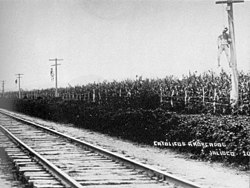
"The bodies often remained on the poles until the... town renounced public religious practice." (Wikipedia)

Both are horrible tragedies. It also speaks very poorly of the party that the government documents about the 1968 event were kept continually secret and not released until a president from a different party was finally elected (Vicente Fox, 2000) and ordered the release.  As for the Cristeros War, children in schools run by states governed by the PRI (which is the majority) still don't learn about that war as a part of Mexico's history. A party that has not yet taken responsibility for their past, and continues to try to hide its past atrocities is ready to take the presidency again.

Monday, September 19, 2011

Local History Expert – A Homeless Man in Halifax

Halifax - Little Dutch ChurchAlthough in some sense they may be less reliable in accuracy sometimes, local, home-grown, self-made history experts are far more interesting than than the official ones.

I had a chance to experience such an expert in Halifax.  While my brother and I, along with our families, were walking down the street in Halifax past the historic church building known as the “Little Dutch Church” (pictured) and chatting about why this Anglican Church had been built for Lutheran German immigrants, a homeless man walking by overheard us, and took it upon himself to jump in the conversation and share what he knew.

Yes, the church was Anglican, he confirmed, even though the parish members were German immigrants.  The round church building just a block or two away (St. George’s) was also Anglican.  He knew about their history; he had slept in both churches in the past.  The one we were looking at – the “Little Dutch Church” – had been the scene of some archaeological controversy as well; some excavation under the building had unearthed some bones, which were recorded by archaeologists and then re-buried (see Little Dutch Church - Reburial Noticepicture.)

These stories were told with the enthusiasm and eagerness of someone who simply wanted to share what he knew, and had no agenda, purpose, format or guideline in doing so.

We never learned the significance of the bones since at that point we reached the soup kitchen where the man was headed.

Tuesday, August 30, 2011

Martin Luther vs. Desperate Housewives

Desperate Housewives or Martin LutherA few weeks ago, there was a distinct pattern in our home.  After the kids were in bed and asleep by about 8:30, my wife would be watching DVDs of the TV series Desperate Housewives, and I would read about Christianity. My reading is from various sources but focused on a book about the history of Protestantism which features a somewhat menacing picture of Martin Luther on the cover; besides this, when I first started reading the book, she would ask me questions about some themes, which usually lead back to Martin Luther (or sometimes John Calvin).  Hence my wife refered to my reading as “Martin Luther” – for example, when we went to bed, she’d ask me, “So, what does Martin Luther say today?”


Our evening activities had thus become a contrast of Desperate Housewives and Martin Luther.  Thinking about this contrast, I’ve come to an important conclusion:

If Desperate Housewives had existed during the 16th Century, the Reformation would not have happened.


Here are the reasons why:

  1. If Martin Luther had seen the women and men interact in this series, he probably would have been afraid to marry, and would have pointedly decided to remain in good status with the existing church simply to stay within the safe bounds of celibacy, regardless of all the perceived deficiencies of that system.
  2. Luther, Calvin and the others could have attacked moral deficiencies of the culture represented in the series rather than those of the medieval church.
  3. Those looking for a a place to apply purer forms of Reason could’ve used it to analyse characters and plots, rather than the Holy Scriptures.
  4. Viewers would also have realized that grown, educated adults are incapable of “rational” living, thus rejecting the proposal that all are capable to interpret the Bible for themselves, and perhaps even rejecting pure reason as a viable approach to understanding.
  5. The Reformers would’ve seen some of the long-term results of “de-sacralization” of the physical world and abandoned their agendas of iconoclasm and re-interpretation of True Presence and the Eucharist (Holy Communion.) 
  6. Most importantly, if Luther, Calvin,Zwingli, Grebel and any of the others had seen this series, they simply would’ve become too addicted to spend any time on the agendas of reform, restoration or revolution.  Upon conclusion, they probably would’ve sought out some other T.V. series with similarly addictive qualities to fill their time.  (I find Desperate Housewives draws me in only a little, but the series Rome is much more addictive; most people I know, however, become very addicted to the first series.)


So, what would you choose – the Reformation or Desperate Housewives?

Wednesday, February 16, 2011

Tepache - A Fermented Pineapple Drink

Tepache, in Tacubaya (from Wikimedia Commons, user Thelmadatter)
Tepache is a traditional fermented pineapple drink popular in some areas of Mexico. As seen in the picture, it is a reddish colour.  It is still fairly sweet, and only mildly fermented - perhaps similar to that of a milder traditional fermented apple ciders.  (Not the Strongbow's sort, but the actual raw apple juice naturally fermented.)

The place where I have had it most often is in a small group of flauta shops in the Tacubaya neighborhood of Mexico City.

Flautas are tortillas, rolled up with a little meat in the middle, fried until crispy and brittle; they are served with lettuce and sauce on top of them, and, in the case of these shops in Tacubaya, with tepache.

Tacubaya is mostly a working class neighbourhood, and it's the end of one of the major subway lines, thus also serving as a major bus and transportation terminal.  On Sunday afternoons, many young adults from villages to the west of Mexico City (approx. 1 hr away) come to Tacubaya, hang out in what's sort of a village square, and enjoy the dining and shopping of this vibrant neighborhood, all of which is really, really cheap (I got a pair of New Balance running shoes there for $40 - originals!)  The neighborhood is in no way pretty or picturesque, but has a charm that only a place that has been given over entirely to practicality of the city and has been "discovered" only by those who need it's cheapness and complete lack of pretentiousness.  It was one of the original Aztec villages that was in alliance with Mexico City (Tenochtitlan) when the Spaniards arrived at the time of the conquest.

So, needless to say, the flauta shops are also really cheap.  If I remember correctly, the flautas are sold 3 for 50 cents, and the tall glass of Tepache seen in the picture is also about 50 cents.  So, with $2, you'll be doing quite well in this place.  (This is why I was surprised when I moved to Playa del Carmen from Mexico City, and realized that here, even with $10, you're better off staying home.  One of the biggest charms of Mexico City is that you can go out with less than a dollar to your name and have a great time.)
Vats of Tepache in Tacubaya (from Wikimedia Commons, user Thelmadatter)

I found tepache once in Playa del Carmen. The fruit and vegetable store where we normally shop (the same one that had those wonderful tamales being sold in front of it, see xxx), sells fresh fruit juices at about 60 cents a glass.  One day they had tepache as one of the choices. Although this doesn't really count as "fresh fruit juice," I was delighted and had a glass.  I've never found it since.  One of these days I'll ask them for it.

If you're in Mexico City, I highly recommend trying tepache.  It's easier to find, and easier to take down than pulque.  I'm sure there are many other places to try great tepache as well.

To read about pulque, another traditional Mexican drink, read:

My Mexico City Experience - Pulque

A note about the pictures: they are not my pictures, but they are from Wikimedia commons (with a shareable license) and the person who took and posted them noted that they are from Tacubaya; I also recognize the place.

Thursday, October 28, 2010

Looking for a pot of Gold? Perhaps a heart of Gold? Grandpa Pedro, Part 2


Don Pedro (centre) and his sister and brother - about 6 years ago
We all know legends about leprechauns and rainbows and pirates sailing the Caribbean in search of a hidden treasure, but have you ever met anyone who is really looking for hidden gold?  And I don't mean collectors who use metal detectors to find the next coin or artifact, I mean someone who really wants to find a real chest of gold and get rich from it.

Grandpa Pedro is one of those people.  He is authentically convinced that somewhere in the steep, narrow valley owns and lives in there is gold that was hidden during the Mexican Revolution, which began exactly 100 years ago.  Pockets of the revolution were still going on when he was born, but I guess by the time he was a child, legends of the recent Revolution and its upheaval were fresh in everyone's mind.  I can't comment on the plausibility of a rich estate owner coming to hide their gold in this very isolated  valley in the hills, but he is convinced that there is gold hidden there, and has searched all over for it.  From what I understand, many people in countryside areas used to hold similar hopes.

Grandpa Pedro's Work

My wife's grandfather is a very hardworking man.  As I said in the last post about him, from what I understand, there hasn't been a day in his life that he woke up later than 6 in the morning.  His entire life, he has raised animals - cows, chickens, turkeys, goats, pigs among others - and grown crops including corn, beans and squash (a tradition that seems to be as old as the western world itself, and shared by native people throughout North America.)  He also has an orchard of plums, peaches, guavas and a number of other fruit which I have never seen in Canada, I wouldn't be able name.

My wife remembers him making her swing in the trees of the orchard, which had the added thrill of swinging out over a steeper drop! (Pretty much everything there is a hillside.)  She spend most of her childhood summer vacations at the farm, and would climb up into the trees to eat the fruit.  These memories of the time with her grandpa are among her fondest.

He also cares for the home's water supply, which is captured from rainwater in the concrete cistern which I mentioned in the post about homes in this valley, or brought through a hose from a nearby stream.

A Young Pedro Lopez, During His Military Service
I remember on my first visit, I was determined to help him with some of his work, so I joined him to walk out to spring the water was fed into a hose.  I was entirely useless.  Any kind of job on that farm are jobs that people are never taught; they learn them as children watching and participating.  Having to deal with an adult who would need to be "taught" these things was probably just absurd to him.  (It's like making "mole," a very delicious and traditional dish - all the old ladies know how to do it, but they wouldn't be able to produce a recipe; it's something they learned growing up in that setting.)  But Grandpa Pedro didn't seem to be bothered, and simply went about his business fixing something that he had fixed a thousand times before, telling me some stories about the farm along the way.  Once when I asked how I could help, he just kept explaining whatever it was he was explaining and finished the job.  It didn't look difficult, but I'm sure experience made it look easier than it was.

I would love to go during harvest or seeding time some time to work with him, but I would probably have to be insistent in having him show me how to do it.  The unfortunate part is that he does all of this alone, and right now he's getting to old to finish it all by himself.  In our modern society, people retire 25 years younger than he is right now.

Grandpa Pedro's Family

Why does he do it all alone?  Something that struck me about the place, only at the end of my second visit, is that there are no young men.  There are children, there are women of all ages, and there are old men, but there are very few males between the ages of 15 and 60.

At the end of my second visit, my wife and I stopped by her great aunt's house.  Her grandson was there working on the house.  I chatted with him in English, because he had been in Texas for the last 2 years, and for 4 years before that.  He had come back to see his wife, his 2 year-old daughter who he had never seen before, and to do some work on the house.  He was heading back again in 2 months.  I can't confirm, but I guess his wife would have been expecting again by the time he left.  That is where the young men are; in Texas, California and other parts of the U.S., working.

The young women have their children back in the village.  The one's who are lucky, get cheques sent in the mail. The one's who are luckier (in their own perspective) get to join their husbands in the U.S.

(Meeting these people first hand, knowing their history, and seeing their homes, I realize that U.S. policy makers, conservative and liberals alike, are 100% disconnected with the reality of these people, and are therefore incompetent to solve the problem of illegal immigration, which WILL continue despite any wall, despite Arizona's new, strict measures.  But I'll save the political commentary for another post.)

One unfortunate young lady, a great niece of Granda Pedro, who used to live on his farm and take care of both the old men (her grandfather and great uncle), was abandoned by her husband.  Later she had 3 other children by other men, but never again managed to find a stable relationship.  From what I understand, this kind of situation happens all to often.

This second cousin of my wife and her four daughters, who were the only rays of youth on this farm, have now left and live in the town.  The wife of the other cousin - the young man who works in Texas - also left for town with her child, leaving the great aunt alone.  The great aunt, who couldn't take care of herself alone, moved down into the valley so her two brother could take care of her.  This is Grandpa Pedro's family now - his brother and his sister, all three of them getting up their in years.  So, the crop usually gets left at least partly unharvested, and it becomes more and more difficult for them to manage.


As I mentioned the last post, when I heard about the pleasure Grandpa Pedro had in buying a new turkey, and taking care of the recently hatched chicks, I can see that the joy of life hasn't left him.  I'm also amazed that he is putting the effort to care for his aging sister when he himself needs care, or at least help in getting the work done.  I'm amazed by how much passion he has for life at his age.

For the moment, that's all I have to write.  My wife could write a book, I'm sure.  And I'm sure I'll think of more with time.  In April, we want to go visit again.  We're both eager to go back.