Saturday, March 15, 2014

Stations of the Cross Restored and the Prayerful Elderly

Stations of the Cross at Our Parish
This Lent  we are having the Stations of the Cross at my parish (St. Mary Queen of Heaven, Linwood, ON) again.  I have to confirm this, but I believe it is the first time these prayers and meditations have been held here since we started sharing a priest 13 years ago.  Of course, they are being led by a layperson while the priest leads the stations at the main parish nearby (St. Clements).

We though at first that it might be only my family showing up, but we were pleasantly surprised to be joined by 6 elderly parishioners from the community. 
Detail of the 12th Station
These parishioners, along with a few others who join when they can, form a core group of what the pastor praised as "our prayerful elderly."


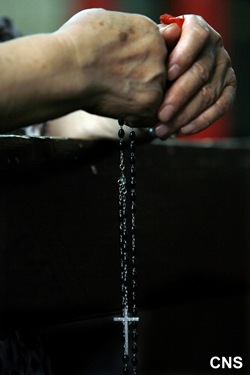
They always come 30 minutes early for Mass to say the Rosary and pray and a number of them always come to Adoration of the Blessed Sacrament and Mass (in honour of Our Lady of Perpetual Help) on Wednesdays.

It hadn't occurred to me very directly before our pastor mentioned it, but this group is a true gift for our parish; I don't doubt that the dedicated and constant prayers of this group are a strength and blessing for the rest of us.

And I am delighted that they have blessed the newly re-established Stations of the Cross by joining us.

One of our crucifixes

Wednesday, March 5, 2014

Strict Lent - How to Make it Work!

Today, Taylor Marshall (whose blog I recommend) shared a story of how he ruined his Easter one year by trying to go too hard on himself at Lent -How My Strict Lent Once Ruined Easter – A Lesson on Lenten Crash and Burn.  Excellent post - go and read it!

I wrote the following as a response on how I moderate my Lenten penance.

1. Talk to Your Priest


I tend to "go hard" (this year, for example, I'm giving up meat, coffee and Facebook) but I moderate this in several ways. One is I take the advice of my priest; if he says something is too much, I believe him. Dr. Marshall mentions this point and it's very important; most priests have seen enough crash and burn stories that they can see it coming if you're being too hung up on going all out. I have done this since I first joined the Catholic Church (this is only my 3rd Lent) and priests are very helpful in giving direction like this.
 
2. No Penance on Sunday!
 
We must remember that Sundays are not days of penance; it's not that penance is "optional" but, from what I understand, it is actually incorrect, since every Sunday is like a mini Paschal feast, we are to celebrate on Sundays. Every Sunday I will be enjoying my meat and coffee (I'll stay off FB, though, since that could lead to a habit, and it's not really "festive" to go on FB in any way); this way it's only 6 days at a time, and these urges don't build up so much. I enjoy it thoroughly and in moderation. We're usually at my parents' house for lunch on Sundays, and they inevitably make a nice roast. My mom has coffee with the desert, and I wait till it's served (rather than gorging into the coffee the minute Mass ends), enjoy two cups with cake, maybe one more later in the day and leave it at that. (Basically, what I would do on a normal Sunday.)
 
Make sure the festiveness of Sundays is a celebrating Christ, not just gorging in the things you abstained from; we eat meat and cake, drink wine and coffee and spend our Sundays with family to celebrate the Resurrection. If you find yourself going crazy for meat (or whatever you gave up) on Sundays, it's probably a good early indication that you may need to make adjustments and you should talk to your priest to guide you through those adjustments, especially if you haven't yet!

3. Rededicate Penance to Christ

Even with the 6 day waits, it can be disastrous to start thinking about our penance day in and day out, and even more disastrous to become frustrated that you can't stop thinking about it. Meat isn't really an issue for me (my family eats meat only 2 or 3 times a week as it is), and I usually feel the break from FB is a relief; coffee could be a killer for me. But if I find myself thinking about coffee, instead of fighting it (which just turns into a frustrating battle with yourself over something silly), I let myself enjoy looking to forward to coffee, and then I pray a decade of the rosary or something like that, thanking the Lord for the coffee I'm going to enjoy on Sunday and rededicating what I have given up to Him.

4. Make the Penance a Gift

When I want coffee in the morning, I make a cup for my wife instead, who doesn't give it up. This seems like it would be counter-productive, bringing the temptation too close, but for me it works. I feel a certain satisfaction that someone else has enjoyed it and that I have made my sacrifice a gift. If you give up meat, buy a roast for the old widow next door (who in all likelihood hasn't given up meat.) We did that last year. If the temptation is too much, then find another kind of gift to give instead.

5. Don't Isolate Yourself

Try penances that other people around you are doing. Support helps. In the old days, besides being holier (as Dr. Marshall pointed out), people had the support of EVERYONE around them doing the same penance. Some Catholic and especially Eastern Christian communities still have that. We as North American Christians don't. Meat isn't hard at home for us, but my parents (who we visit often) rarely have a meal without meat. My wife and I support each other, and my parents are very understanding, so we get by. As for coffee, my wife doesn't give it up, but she also never makes coffee for herself at home (that's my job!) So, I don't have to smell coffee brewing from the kitchen, unless I'm the one who did it as a gift for my wife.

If you know that people bring cookies to work every day and you love them, or there's a bakery you walk by every morning, it could be torture to give up sweets. Don't choose penances to torture yourself. I give things up that are important, but not things that will be wafting in my face all the time.

6. Leave Yourself Some Pleasures

I love beer and wine. Having given up coffee, I can still sit down in the evening and enjoy a glass of wine with other people. I also enjoy my pipe. If I tried to give up alcohol and tobacco too, it would be torture since I wouldn't have that little pleasure to fall back on - and I can enjoy the pipe even on Ash Wednesday or Good Friday when I'm otherwise fasting as per the rule! Don't try to eliminate every one of the most pleasurable items, but rather specifically choose a couple that you WON'T give up.

7. Build Up Little by Little

In my three Lents I've progressed from giving up one thing to three. I don't expect to increase this by one item every year, but I hope that in 20 years I can handle more than I can now. Disciplines are developed with time, not over night. I will also not feel bad if one year I have to go easier on myself for some reason or another.

So, it's possible to go hard for Lent, but it's not by any means necessary or even helpful to torture yourself.  I think these little guidelines I've created for myself have been a big help.

Sunday, February 9, 2014

On Gin and Turpentine

Having finally returned to my practice of painting, a couple of weeks ago I finally used up the bottle of odourless paint thinner (some sort of mineral spirits, taltine, I think.) So, for the first time in about 20 years, I bought a can of turpentine.

Expecting the worst, I opened it to find that I actually didn't mind the smell that much; in fact, it smelled rather appealing!

How could this be? From my early days of oil painting, I remember the smell of turpentine as one of the most wretchedly repugnant odours to be found.

A Difficult Past

Then I remembered.  Some time in 2012, I think, I discovered a few abandoned bottles of liquor in the house we are renting.  Among them, was a bottle of Hiram Walker's London Dry Crystal Gin.

I left that bottle for last, recalling horrible memories of the gin and tonic that friends had convinced me to try - possibly the worst liquor or mix I had ever tried - at least such was my opinion at the time.

The flavour of gin, you see, to me seemed nearly identical to the strong odours of turpentine that oil painting had made me hate so much.

A Conversion Story

So, after a time when I had finished the other bottles and only that one was left, it sat in the cupboard for quite some time, untouched.  I considered throwing it out, or giving it to some gin-loving friend of mine.

Finally, I decided to open it and give it a try. Still disgusting.  Still tasted like turpentine.  But now and then, I would have half a shot.  I actually started acquiring a bit of a taste for it.  I served it for guests, now unashamed to have it in my house. (No tonic; I would not spend money on buying something that tastes like carbonated salt water.)

By the time the bottle was gone, so was my dislike of the liquor.

I probably still wouldn't go out and buy a bottle of gin. But I would be glad enough if someone served me some (preferably without the tonic.)

So, opening this can of turpentine, I realized that I haven't changed my opinion that gin tastes like turpentine; but rather both - thanks to this old bottle of gin - have become rather pleasant rather than repulsive.

(Note: I still take due care with my turpentine and use it safely!)

Friday, February 7, 2014

A Special Post, Just for My Wife!

Today, my wife complained that I don't say enough to her, and that I'm not writing enough in my blog.  So, I decided to kill two birds with one stone.  Here's a blog post, just for you Cecy!

I love you, all the time, even when you look like this:


But even on your worst days, to me you always look like this:


I have to say, though, I like you best like this:


Or like this:


You like it when I keep things short, and use lots of pictures, so I think this is a good time to stop.  I could've kept it all shorter, and just said:

"I love you."

Thursday, January 30, 2014

Stetson - Some Recent Memories of a Good Dog (Pictures)

Some pictures of Stetson (a dog who I owned for a few years, and was in the family for his entire life, until we had to put him down yesterday.)

These pictures are from the last three years - some with his brother, Romeo. (Tomorrow or on the weekend I will share some from our travels together):


Monday, January 27, 2014

"Come as You Are" Revisited: Is the Church for Saints or Sinners?

Just over three years ago, I wrote a post in this blog called "Come as You Are;" the post had nothing to do with Kurt Cobain but the title was ideal. The post shared an observation about my mother-in-law's feelings about the Catholic Church; while the faith and moral teachings are very important to her, she takes pride in the fact that it is a place where sinners and the down-and-out in general could approach God without being turned away or judged.

I then went on to make some observations about how she saw this as a contrast to the various new denominations that have begun proselytizing that country in recent times.

For most of the time since then, I was rather doubtful of that post, thinking that I had probably gone off track.  Yet, I justified it by the fact that I was not yet Catholic and only just beginning to take a renewed interest in my Christian faith.

Looking back and re-reading the post today, however, I realize that I really was onto something, at least in the general sense.  I have come across some new ideas and had some new experiences that help put the idea of "come as you are" into a more solid context.  Most importantly, I see that the message was not just for others, but also for me.

Two Opposite Errors


When it comes to opening a church to all alike, there are two opposite errors which both essentially keep people from really coming as they are - both push people to pretend they are someone they are not.  One is to assume that everyone who passes through the doors of a church must be a saint, or become one quickly.  The other is to deny that sin exists and just declare that everyone is a saint regardless of how they live.

Closed Congregations

I'd guess that just about everyone has had the experience that when they walk through the doors of a church and suddenly get an urgent feeling that they are very out of place. Putting the truly closed congregations aside, there are many ways a church can deliver this message even if their doors are quite open.  Most kinds of uniformity can do this.  For example, in Mexico men of certain denominations will wear golf shirts, tucked into casual dress pants and have a neatly combed side part.  While such dress is certainly tasteful, anyone who's been to Mexico knows that it is also very unusual.  Thus, the average Mexican (or even expat) wandering through the doors to worship God on Sunday morning  would find himself standing out like a sore thumb, and probably immediately being approached to be welcomed as the new-comer.

As this last example shows, some of the factors which tend to close off a congregation are meant in truly good will and kindness.  Yet, the experience I just described is quite off-putting to many people.    The way of dressing is certainly connected to a saintly way of life and albeit given in warmth and kindness the invitation includes an unspoken assumption that your differentness is an indication of sinfulness.

Many people desire a church of more "saintly" Christians, and all too often outward signs that even unofficially indicate this can be a way of alienating outsiders.

Open Doors and No Walls

Then their is the opposite situation.  The idea that sin simply doesn't exist.  A question that shows a concrete parallel is this: what is the point of having open doors if your church has no walls? While a church like this may give the impression of welcoming everyone, the truth is that they welcome no one; no one is given the benefit of approach God as a sinner, which we all must do.

A Field Hospital for the Sick

One of my favorite images from Pope Francis so far is his comparison of the church to a field hospital after the battle.  The problem with both situations I describe above is that both assume that the church is here only for or primarily for saints; (one tries to make quick work of sanctifying everyone, the other simply declares everyone a saint.)  Christ said the opposite; he told us he came for the sick, not the sick, not the healthy.  Like Christ, his church is here for the sick and the wounded.  This means two things - first of all that we must acknowledge that nearly of all of us have been wounded in the battle, and secondly that we must have our doors open to the most deeply wounded.


Here is one of the hardest things I have learned, and a point I still struggle with in action; when the wounded come in fresh from the battle field, unsure if they will make it or not, they must not get the impression that they are in the company of the healthy, and have made a mistake by entering a place they don't belong, as in my first point above, but the should see clearly that they have indeed made it to the hospital, the place where the wounded have gathered for healing - for care and for medicine.

This seems like a paradox, since the first aspect most of us will judge in a church is how "good" the people are; yet, I can guarantee you that a newcomer will feel much more at home in the company of those acknowledge their own faults than those who pretend not to have any - and, most importantly, it is simply the truth - pretty much all of us are sinners in need of the Great Physician.


Everyone must become aware of their sins, not so they feel ashamed or out of place at church, but on the contrary so they feel confident to bring their sins with them and know they can leave them there, just as everyone else does.


Confession to a Priest

Three years ago, when I wrote that post, I had a sense of arrogance.  While I was convinced that I was coming the fullness of the faith, at the same time I was sure that I would have a good deal to "teach" most Catholics, who knew so little about the Bible and even their own faith.  When I wrote about "come as you are," I was, somewhat subconsciously, writing for the "others," those real sinners out there.

What I have learned the most since then is that "come as you are" is for all of us, not just those who have done (or are doing) the more obvious or sins.

For a church really to be open for all to "come as they are," even those stable within the church must have the benefit of being allowed to come as a wounded person, finding medicine for their wounds, forgiveness for their sins.

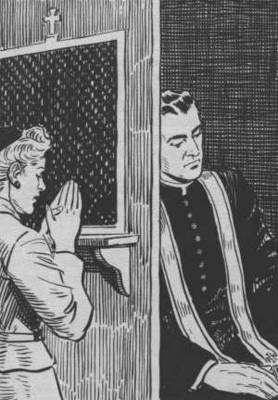
The best and easiest way for this to happen is sacramental confession, where you confess your sins to a priest who absolves those sins.

One of the surest signs of an unhealthy Catholic parish is an empty confessional; not because the people are more or less sinful, but because it indicates that the most regular church-goers are not ready to recognize their own short-comings - they are not prepared to come as they are.  How can we expect others to come as they are we do not?

Rosaries and Freedom of Worship

Yet, it is important that recognize that not everyone is ready or willing to receive such medicine.  Not everyone arrives ready to confess their sins (and consequently not ready to receive Christ, physically through communion, or otherwise.)  Even these people need medicine, perhaps more so than those who are in line for confession.


Whether people have come prepared to receive Christ or not, I would say one of the most helpful things a church can do is to allow people to focus on God and pray in the way they are best disposed to do.  I think one of the biggest obstacles we place create in worship is uniformity in worship.  When you walk into a church and everyone else stands and sits at the right time, says all the right responses, is swaying their hands in the air during the music, or hugging everyone around them at some point in the service, it likewise creates pressure for everyone to be a good, joyful Christian.

Christian joy is wonderful, and necessary, but the bottom line is that not all those wounded in battle will enter the field hospital bubbling over with joy; and if they aren't, they shouldn't feel that they have to pretend they are. (Just like those who are should feel free to show it.)

In recent decades, much has been said about people praying the rosary during Mass - for the most part, the practice has been condemned; people shouldn't be distracted from paying attention and participating.  Yet, while the rosary is certainly not the ideal form of participation, it is most certainly one good example from Catholic worship of an easy way for people to focus on God and worship him on a day that for ever reason their mind might otherwise be distracted and wandering.

It's not about defining some sort of requirements; quite the contrary, I would say that the best situation would see a bit of everything - during a hymn, for example, some people may be singing loudly, others re-reading the Gospel reading, others on their knees praying quietly, etc.  It allows all (regulars or not) to come as they are and worship as they need.

(I imagine this picture is from the
outside of the churching looking in)
 
Come as You Are

When I walked through the doors of Our Lady of Guadalupe parish in Playa del Carmen several years ago, I was impressed that while words from the pulpit were not minced or spared when it came to sins, so many sinners came willingly as they were.  The confessional always had a line up that lasted through the first half of the mass.  Even those arriving late would go to kneel in front of the altar, light a candle and say a prayer before going to confession or joining the service.  All those sinners, I could see, were welcomed and taken care of. 

What I didn't realize at the time is that the part most appealing to me, what ultimately drew me closer, wasn't that others could come as they were, but that I could come as I was (and as I still am) - as a sinner, wounded in battle and in need of medicine.

Friday, January 24, 2014

"Every Man Has Hated Mankind When He Was Less than a Man"

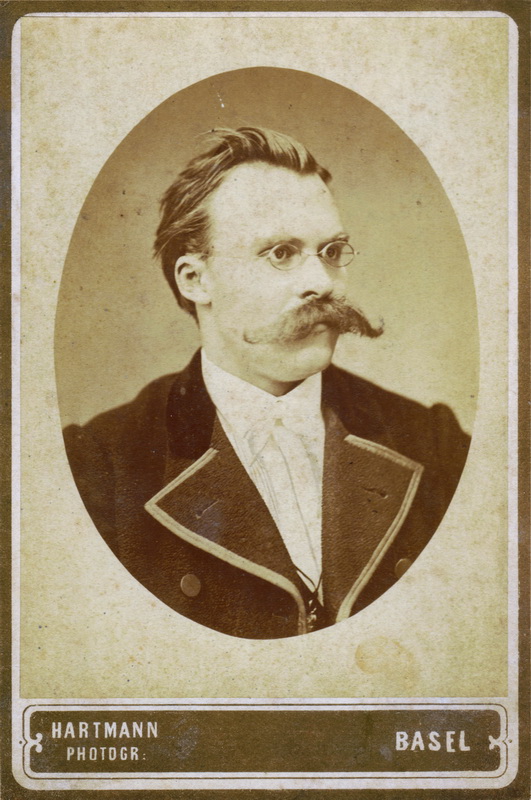
Friedrich Nietzsche
"Nietzsche's aristocracy has about it all the sacredness that belongs to the weak.  When he makes us feel that he cannot endure the innumerable faces, the incessant voices, the overpowering omnipresence which belongs to the mob, he will have the sympathy of anybody who has ever been sick on a steamer or tired in a crowded omnibus.  Every man has hated mankind when he was less than a man.  Every man has had humanity in his eyes like a blinding fog, humanity in his nostrils like a suffocating smell.  But when Nietzsche has the incredible lack of humour and lack of imagination to ask us to believe that his aristocracy is an aristocracy of strong muscles or an aristocracy of strong wills, it is necessary to point out the truth.  It is an aristocracy of weak nerves."


-Chesterton, "On Certain Modern Writers and the Institution of the Family," Heretics

(My emphases)