Sunday, September 8, 2013

To love another ....

 Having lived in a few (Western) nations, I will be so bold as to claim that I have identified two things that are universal (among many others I'm sure.) One is the love of human life. Unfortunately, alongside of that love is the hatred of human life.

When you tell people that you have four children and their first response is "you should've used a condom" or (in the case of the mother) "So, you've had your tubes tied now, haven't you?" they're basically telling you that the world, or at least your family, would be better off without your most recent children.

In the past 2 weeks, these exact ideas have been told to me and my wife more often than I would like to say.

That is hatred of human life.

While there are far too many of such hateful people, fortunately there are still many more who love human beings.  They see baby twins and play with them; they bubble over in joy about how cute they are.

Or, on the other hand, they might talk about which one might be a better boss, and which one might be a better boss and which one might be a better salesman.  Others may notice which one likes to get dirty and which one likes to stay clean. Some may kiss them, others may give them a blessing.

Not once does it occur to these people how the existence of these beautiful twins could've been prevented. Why? Because they love people, and human life gives them joy.

In the same past few weeks - especially in the past two days - these and many other such wonderful things have happened when people see our twins, thankfully far more than the kind of comment mentioned above.


The joy of seeing an infant is the joy of seeing new life brought into this world and at its very root the deepest love for humans.

The next time you see a baby, let it bring joy to your heart, and not a Godless, inhuman wish that the baby's life would've been prevented.

Thursday, August 22, 2013

When Cowards Attack - A Warning to Would-be Proselytizers

I have no problems with a good argument about religion.  (I tend to loose most of mine, but that's another story.) A one-on-one discussion or even argument on even ground between two people who have both chosen to "draw their swords" and duel is fine.  After all, we shouldn't shy away from defending and promoting what we believe.

However, I have a bone to pick.

There are some Christians, and people of similar beliefs, out there who are cowards.  They choose a person who:
  • is not interested in arguing
  • is not used to arguing
  • is not good at arguing
  • is always very nice and respectful to everyone
  • who feels pretty bad about arguing and being berated
  • has not initiated a discussion on religion
When they are alone with this person, or with a few others so they can gang up on this person, they rip a layer off of them. The do not give them a chance to speak, they do not respect their beliefs, and they just pound on them verbally.

And these people are spineless, gutless, good-for-nothing cowards.

They are often very nice people on the surface. For example, the last person I met like this was a "kind" old Mennonite lady (I think she was Mennonite - it was at least a similar denomination.)  I can tell you, though, her heart is rotten at its core.

Now, I'm not talking about myself when I talk about the people who get picked on.  I can hold my ground, or at least handle defeat if I can't.  If I get pummelled in an argument, well, it's probably my own fault, since I probably started it.  But I'm talking about other people who are far kinder, gentler and more loving than myself.

And how do I know these "attackers" are cowards?  Well, if another person walks into the room that may defend the person they are attacking, they shut up.  They stop. Suddenly they're nice again, only sneaking a few "nice" passive attacks hidden behind sly poison like "I'll pray for you that you'll understand" - lie as venomous as Satan himself.

Some Advice

So, now I've told you who I'm talking about. If you're someone who knows me and you're reading this blog, you're probably not one of these people.  As I said, I'm not talking about fair arguments, or even heated arguments; I'm talking about cowards who attack others who can't defend themselves.

Advice: if you know someone like this, perhaps at your church, or someone of similar beliefs, perhaps you don't shut them up because you think they're defending the Truth; they're on your side - on Truth's side - after all, even if they're a bit abbrasive, right?

Wrong. Shut them up.  Tell them that they are cowards and that they ought to be ashamed of themselves.  If they don't stop, stop associating with them.  Be a real man (or a real woman, if such is the case) and defend the person they attack.  Even if you don't agree with the religion of the person they are attacking, you don't have to defend the religion.  You just have to defend the person.

"Look, you're being an asshole.  Shut up and leave this poor person alone.  You can talk about God a lot, but why don't you try showing His love?"

That simple.

Don't put people you love and care about into the pain coming into contact with them because you don't want to offend an asshole.

Let me make this plainly clear; even if they understand the greatest mysteries of the Faith and God, and know the truth better than any human alive, if they are such dogs to treat another person like this, then they do not have the love of God in them.

Now for my warning ...

So, even though it's unlikely that anyone like this who I know will read this blog, let me put my warning out there:

I will no longer tolerate this.  Until now, I've been of the opinion that if I don't see it, I can't say anything.  But as I said, these cowards shut up when another person walks into the room.  No more.  If I find out this has happened, and I am anywhere near such a person, I will go back to them and put them in their place.  I will ensure that they feel like the dirty scum they are - they will feel a hundred times worse than the person they were picking on.

Tuesday, July 30, 2013

What Pope Francis Said about Homosexuality ...

There's a lot of hype in the news today about how Pope Francis is beginning to "change the Church's teaching" on homosexuality.  Let's see what Pope Francis really said:

QUESTION: I would like to ask permission to pose a rather delicate question.  Another image that went around the world is that of Monsignor Ricca and the news about his personal life.  I would like to know, your Holiness, what will be done about this question.  How should one deal with this question and how does your Holiness wish to deal with the whole question of the gay lobby?

FRANCIS: Regarding the matter of Monsignor Ricca, I did what Canon Law required and did the required investigation.  And from the investigation, we did not find anything corresponding to the accusations against him.  We found none of that.  That is the answer.  But I would like to add one more thing to this: I see that so many times in the Church, apart from this case and also in this case, one  looks for the “sins of youth,” for example, is it not thus?, And then these things are published.  These things are not crimes.  The crimes are something else: child abuse is a crime.  But sins, if a person, or secular priest or a nun, has committed a sin and then that person experienced conversion, the Lord forgives and when the Lord forgives, the Lord forgets and this is very important for our lives.  When we go to confession and we truly say “I have sinned in this matter,” the Lord forgets and we do not have the right to not forget because we run the risk that the Lord will not forget our sins, eh?  This is a danger.  This is what is important: a theology of sin.  So many times I think of St. Peter: he committed one of the worst sins denying Christ.  And with this sin they made him Pope.  We must think about fact often.

But returning to your question more concretely: in this case [Ricca] I did the required investigation and we found nothing.  That is the first question.  Then you spoke of the gay lobby.  Agh… so much is written about the gay lobby.  I have yet to find on a Vatican identity card the word gay.  They say there are some gay people here.  I think that when we encounter a gay person, we must make the distinction between the fact of a person being gay and the fact of a lobby, because lobbies are not good.  They are bad.  If a person is gay and seeks the Lord and has good will, who am I to judge that person?  The Catechism of the Catholic Church explains this point beautifully but says, wait a moment, how does it say, it says, these persons must never be marginalized and “they must be integrated into society.”

The problem is not that one has this tendency; no, we must be brothers, this is the first matter.  There is another problem, another one: the problem is to form a lobby of those who have this tendency, a lobby of the greedy people, a lobby of politicians, a lobby of Masons, so many lobbies.  This is the most serious problem for me. And thank you so much for doing this question. Thank you very much!

(credit for text: Fr. John Zuhlsdorf)

Let's just review the main points of what Pope Francis said:
  • Homosexual acts are sins.
  • If someone who previously committed such sins "experiences conversion" and confesses that sin, the Lord will forgive it.
  • We must forget the sin after that.
  • It is wrong to go digging up sins from a person's past to tarnish their name, even if those sins were real. (standard Catholic teaching - the sin is called "detraction" and, like homosexual acts, is a mortal sin)
  • We must love and accept people who have a homosexual tendency (my note: whether they are active or not, or have repented or not)
  • Experiencing such a tendency is not a problem
  • Forming "lobbies" is a "serious problem" (I would assume this includes gay pride and activist groups.)
Now compare to what the Church's teachings have been on the matter:


2357 Homosexuality refers to relations between men or between women who experience an exclusive or predominant sexual attraction toward persons of the same sex. It has taken a great variety of forms through the centuries and in different cultures. Its psychological genesis remains largely unexplained. Basing itself on Sacred Scripture, which presents homosexual acts as acts of grave depravity,141 tradition has always declared that "homosexual acts are intrinsically disordered."142 They are contrary to the natural law. They close the sexual act to the gift of life. They do not proceed from a genuine affective and sexual complementarity. Under no circumstances can they be approved.
2358 The number of men and women who have deep-seated homosexual tendencies is not negligible. This inclination, which is objectively disordered, constitutes for most of them a trial. They must be accepted with respect, compassion, and sensitivity. Every sign of unjust discrimination in their regard should be avoided. These persons are called to fulfill God's will in their lives and, if they are Christians, to unite to the sacrifice of the Lord's Cross the difficulties they may encounter from their condition.
2359 Homosexual persons are called to chastity. By the virtues of self-mastery that teach them inner freedom, at times by the support of disinterested friendship, by prayer and sacramental grace, they can and should gradually and resolutely approach Christian perfection.
(CCC 2357-9, my emphasis)

Pope Francis is simply reiterating what the Church has already been teaching.  He advocates love and compassion, but is very direct in identifying sin and the need for repentance, as well as the Gracious result of that repentance.

So far it looks like the Pope is Catholic.  What a surprise.

Thursday, July 25, 2013

Saloon Brawls Should be Safe, Legal and Rare

In the complete absence of saloon brawls or the like, men have been faced to turn to video games; this has caused the dangerous illusion that they are really capable of winning a brawl, or recovering from one quickly.

Even worse, many men don't even have video games and are left searching for alternative expressions of masculinity, like smoking pipes or shaving old-fashioned razor blades; needless to say, both are life-threateningly dangerous.

To help remedy this urgent situation of masculine health, I propose the following:

Saloon brawls should be safe, legal and rare.

Safe - Paramedics should be on hand to remove men who can no longer get up on their own and give them adequate medical treatment.  Missing teeth or broken arms should not qualify for this service, since those suffering from these injuries can still walk home and take care of themselves.

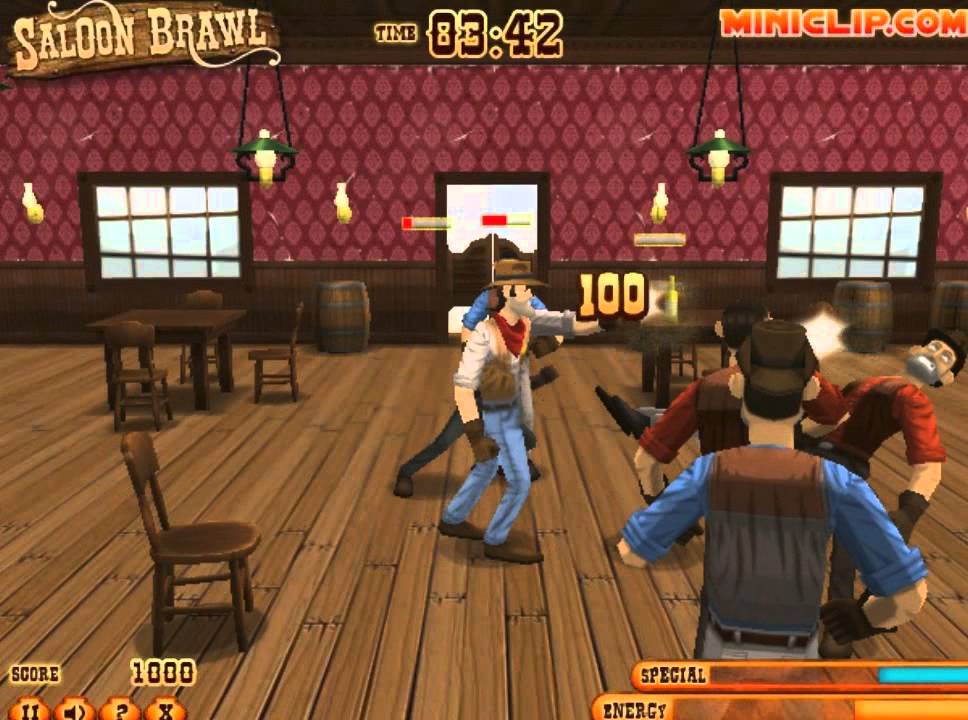
A saloon brawl video game
Legal - Current laws have made impossible for men to initiate or even seek out local brawls;  such activity would surely bring jail time and legal action.  Our laws must be changed to reflect this basic necessity and right for masculine well-being; a man should not have to fear being jailed or a criminal record simply for breaking a wooden chair over another man's head.

Rare - It would be unreasonable to think that the local tavern could carry the costs of a brawl every Friday evening.  Besides the inconvenience of closing for several days for repairs, it would drive up the prices of beer.  Brawls should allowed to happen often enough that any man choosing to participate could easily do so in his lifetime without having travel far or wait till he is too old to do so; yet they should be rare enough so the local taverns can recover and absorb expenses easily.  Men initiating tavern brawls too frequently in the same place would be expected to cover the expenses.  Those who are fond of brawls are free to find a different tavern or bar each week.

Some would argue that this last point is limiting to a man's right to brawl as he sees fit; men should be free to choose about their own body.  However, the point of this proposal is not to create a free-for-all, but simply to give each man the choice to participate in a tavern brawl should they feel that need, rather than having to turn to sad situations of video games, smoking or shaving with dangerously sharp objects.

Friday, June 14, 2013

Blogging by E-mail?

I'm getting close to perfecting my program set-up for my Acer One Netbook - something that would be simply an impossible dream in Windows.

Next step?

Find a good way to edit blogs.  Blogger's composition screen uses up so much space for menu items, settings and (unnecessary) Google options that it leaves less than 1/4 of the screen at the bottom left for actually writing. That makes it hard to edit, see what I've typed and work with images.


So, here goes my test with blogging by e-mail.

This is test #3:
#1 - Google Docs, failed
#2 - was an e-mail trial and didn't get the images right
Now, I got myself more screen space for composition in my e-mail program (Thunderbird) and I think I figured out the image thing.  Let's see ...

Saturday, June 8, 2013

Xubuntu and The Perfect Programs for Me

Some of my new programs in Application Finder
Last post, I talked about how I made Xubuntu visually ideal for a netbook; it already functions perfectly.  Today, I'm just going to give a list of programs I added.  You'll notice they're mostly office items; for multimedia I just use the internet browser (Youtube for videos and Grooveshark for music.)


System and running utilities:
Synapse - Yesterday, I described this neat tool - the perfect combination of a menu and a program, document and folder search, as well as a bunch of other stuff.
Synaptic - Not to be confused with Synapse above, this program installs and removes programs. It has a simpler user interface than the default Ubuntu Software Center, but is faster, more flexible, and better at cleaning up removed programs.
Deja Dup (backup) - This backs up files onto a hard drive or cloud drive (like Google Drive or Dropbox.) The first back up took about 30 minutes, and after that about 10.
Gnome Disk Utility - This formats and creates partitions on disks. It also checks basic disk health and temperature.
Java (open jdk java 7) - LibreOffice needs this.
Firewall (ufw & gufw) – They say Linux doesn't usually need security software. Just in case.
Unebootin (create boot USBs) - This allows you to put any Ubuntu and many other Linux distributions on a USB, either to test run from the USB or to install on another computer. I used it for that second laptop, and just to have fun testing out other operating systems for netbooks.
Skype sign in on my desktop
Office & internet:
LibreOffice – This is a complete office suite, like Microsoft Office, but free. I hid the Standard menu since I use ctrl-s to save. I only have the formatting menu, again saving vertical space.
Chrome - Although I've reconciled with Firefox, in the end Chrome is still slightly faster. It also saves all my browser settings to my gmail account so I can use them on any computer. No bookmark toolbar or menus, only the tabs on top.
Skype - I use it for work. They don't let you open your user from other programs.
Adobe reader - The PDF reader included doesn't work for secured PDFs.
Cheese – This program takes pictures and videos from the webcam. Mostly for fun with the kids. (It also sinstalls Brasero, Nautilus and several other programs with it that are useless to me; so I removed them.)
Because of these additions, I could also eliminate: AbiWord , Gnumeric , Document Viewer , Firefoxy and Xchat . Firefox is fine, but I don't need 2. Xchat is redundant since besides Skype, Thunderbird also includes a chat option that can integrate Google Talk and Facebook chat.

Friday, June 7, 2013

Xubuntu: How to Adapt it for a Netbook's Small Screen

Chrome full-screen, with my adapted main panel to the left

I love minis – usually called “netbooks” in the normal world. In fact, I've come to like them so much, I would probably buy one even if I could afford a full-sized laptop.
But there's only one problem; as Isaid on Tuesday, most operating systems are not made for them. Either you get too much squished into the screen and everything's tiny, or the operating system eats up too much memory for these light-performance machines, or – most often – both.
Yesterday, we saw some nice options in the other Ubuntu variations for netbook-specific desktops that I've actually tried. There are other Linux-based systems also that look nice from the screenshots I've seen.
My solution: use an operating system that's light-weight but very customizable, like Xubuntu.
Xubuntu – Lightweight, Visually Pleasant & Flexible
As I pointed out last post, Xubuntu is not visually laid out for netbooks. However, it offers these advantages:
  • it is lightweight – it works at lightning speed on my Acer One Aspire
  • it looks nice – it's no Windows 7 or Ubuntu, but it's clean and elegantly designed; several other light-weight Linux distributions I tested looked clumsy, or at best very bland – not Xubuntu
  • it's very customizable – for the most part, you can make it do what you want, if you know how; a few weeks ago I did not know how, but in the Ubuntu world, Google answers all
So, after being satisfied that Xubuntu was the best balance of rapid performance, features and visual appeal for my netbook and my needs, I set out to optimize it visually for a small screen.
I will start off by simply listing the changes I made with a brief description why. At the bottom I will offer brief instructions about how to make them, if anyone reading this is actually interested in installing Xubuntu on a mini.
The Changes I Made for a Netbook's Small Screen
The basic concept of these changes is to make everything as big as possible without cluttering the screen, and have everything appear full screen:

1. Synapse Searching and Launching – This is the best and fastest search and launch feature I have used. As you type, it auto-completes with suggestions from files, programs and folders, based on what you've used most and recently. Hitting “enter” launches the selection immediately. This is not specifically a netbook customization, but it eliminates 90% of menu use. On a very small screen, menus are a nuisance. It also eliminates the need for quick-launching buttons in the panels (for common programs like word) saving space.

This is what Synapse looks like:

2. Maximus – This simple program makes all windows open automatically maximized. On a netbook, fullscreen is the best way to go.

3. Panel Adaptation - I replaced the top menu panel and bottom quick-launch panel (which by default look pretty much like a simpler version of what you see in Mac) with 2 side panels:
  • Left Panel – Start Menu (“Applications”), Synapse, Show-Desktop Icon, Clock, and all indicators and notifications (battery, network, etc.) I increased the size to 60 pixels and made it icons only with no text.
  • Right Panel – Shows icons for all open windows; medium icons only (48).
  • Auto Hide & Appear – When the panels are not being used, they are hidden. The appear when you move the mouse to the edge of the screen. This means maximized windows are full screen, optimizing the screen space.
    both panels with the panel modification menu open: notice the green "S" Synapse icon, top left, 2nd from the top
With Synapse, I found all the quick-launch icons have simply not been necessary. On the whole, the narrow main panel that appears on the bottom for windows and on the top for Xubuntu/Ubuntu is not very useful for netbooks, since it's hard to see and eats up much needed vertical space. As an auto-hide side menu with large icons it takes less space and is easier to see everything quickly.

4. Windows & Themes – The following changes in the Settings Manager work wonders:
  • greybird compact ” theme, which has a very narrow, grey header on all windows (with Maximus, mentioned above, there's an option to make all the headers disappear entirely!)
  • default font size - 12
  • reduce workspaces to one 1 – the default is 2, but I found I can work with everything in the same workspace; with two I found I kept having to move open windows between them, although it can help to keep the “open window” panel less cluttered.
  • desktop icons – only removable devices, like USB sticks or external hard drives; For some reason, Synapse doesn't search for these or their content, so it's nice to have a quick-launch somewhere
  • increase menu icon and text size – As I said, Synapse eliminates the need for most menu use, but when I do use the main menu, I don't like to squint; with a size of 28, they are nicely visible, but the entire main menu still fits on the screen; it almost fills it. (This change isn't in the Setting Manager. It requires changing the menu settings file, which is easy, you just have to know how.)

My full screen in the file browser; notice the larger fonts and icons, and the open-window menu on the right
5. Program Zoom – Besides increasing the size of everything in the Xubuntu desktop, I found it more comfortable if I increased the zoom within each program to about 125-140%. In word documents, this still easily fits the entire text onto the screen. On the internet (Firefox or Chrome) I found most pages have all of their main information on 2/3 of the page (either left or right side); the rest is ads or menus. For a few, you have to scroll back and forth, but I haven't found this is common. (See the screenshot at the very top of this post.)

Come to think of it, this post is already too long, so I'm not going to describe how to make these changes step by step. If you need to know how to do any of this, please let me know.

Tomorrow I will share a list of programs I added, that have nothing to do with netbooks, but make life easier for me.